Quantifying rare-disease phenotypes
Develops recording hardware and AI analysis pipelines, including models of patient mutations.
Staff Scientist
Developing high-throughput tools and Drosophila models for rare disease research.
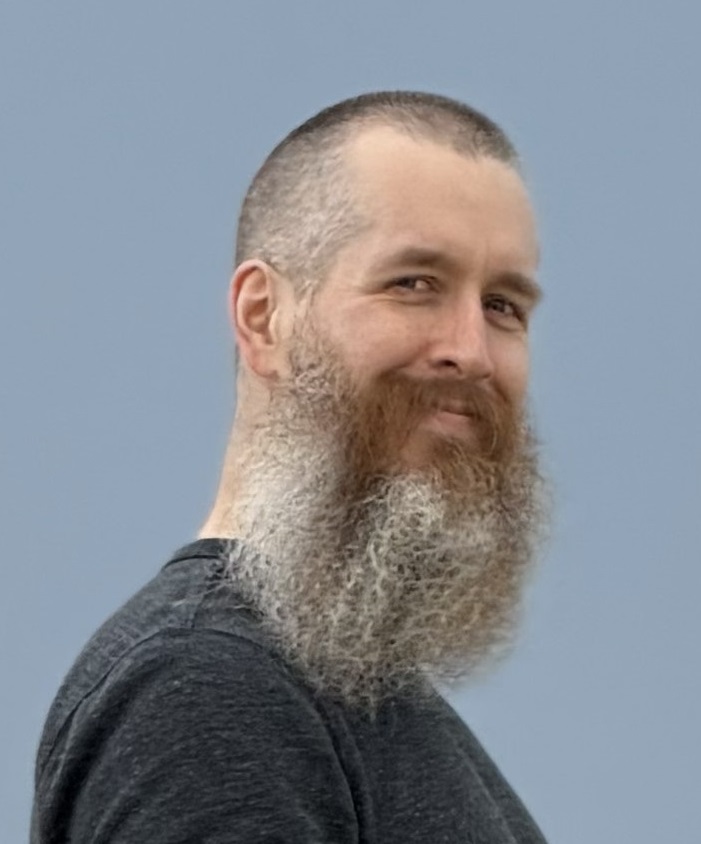
Ryan O’Neill develops high-throughput recording platforms and AI-based analysis pipelines for rare-disease research in Drosophila. His work combines disease models, quantitative behavior, and genetic analysis to connect patient variants with cellular and developmental phenotypes.
He has investigated how Traip prevents neural stem-cell loss in a model of microcephaly, and how duplicated centrosome genes acquire cell-type-specific functions.
Drosophila disease models, high-throughput phenotyping, AI-based behavioral analysis, microcephaly, centrosome evolution and genetics
Guidehouse contractor in the Rusan Lab · NHLBI, NIH
NHLBI, NIH · Nasser Rusan
University of New Brunswick · Denise V. Clark
University of New Brunswick
Develops recording hardware and AI analysis pipelines, including models of patient mutations.
Established a Traip microcephaly model linking mitotic DNA bridges with neural stem-cell loss.
Characterized cell-type-specific functions of duplicated centrosome genes in Drosophila.
Chicago, Illinois
Special Interest Subgroup · Washington, DC
San Diego, California
Virtual
Postdoctoral Seminar Series
Mentors postbaccalaureate researchers in computational analysis, AI body-part tracking, 3D printing, and Drosophila genetics. Previous trainees have progressed to graduate programs and professional training.
Chairs the NIH Artificial Intelligence Interest Group and the NIH Artificial Intelligence Symposium committee (2024–present), and leads the Artificial Intelligence Journal Club and Seminar Series (2023–present). Previously served on NHLBI fellows and seminar committees and as a scientific reviewer.